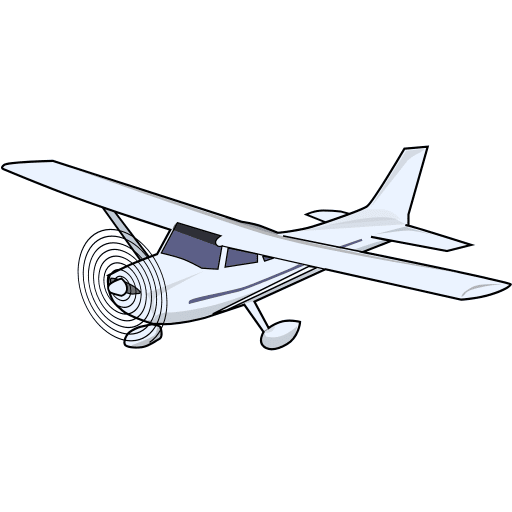

This pre-flight lesson covers the principles and procedures used for a soft field takeoff from a soft, rough or unprepared surface.
The lesson explains how the takeoff technique reduces stress on the landing gear, keeps weight off the nosewheel as early as practical, uses ground effect after liftoff, and establishes the correct climb once sufficient airspeed has been reached.
It builds on the basic takeoff sequence covered in the Normal Takeoff Pre-Flight Lesson . Exact configuration, flap settings, speeds and procedures must always come from the approved AFM/POH.
Reduce the load on the nosewheel while maintaining directional control over the soft or rough surface.
The airplane may leave the surface before it has enough airspeed for the desired climb.
Remain close to the surface as required while the airplane accelerates to the appropriate climb speed.
Grass, mud, snow, gravel and other soft or rough surfaces can create more rolling resistance and place additional stress on the landing gear. The soft field technique changes how the airplane is handled on the surface, during liftoff and through the transition to the initial climb.
What Is a Soft Field Takeoff?
A soft field takeoff is used when the takeoff surface creates more rolling resistance or places greater loads on the landing gear than a firm, smooth runway.
The surface may allow the wheels to sink, drag or bounce more than they would on pavement. The takeoff technique therefore changes to reduce the time and load carried by the wheels while the airplane accelerates.
A soft or rough surface can slow acceleration and make prolonged contact with the surface undesirable.
As lift develops, progressively reducing the load carried by the wheels helps the airplane move more efficiently across the surface.
A long runway can still require a soft-field technique if its surface creates excessive rolling resistance. A short, firm paved runway presents a different problem: limited takeoff distance. In some situations, both conditions can exist at the same time.
Ground Effect and the Soft Field Takeoff
Ground effect is central to the soft field takeoff because it can allow the airplane to become airborne before it has enough airspeed to climb safely away from the surface.
The ground interferes with the airflow around the wing, reducing wingtip vortices, downwash and induced drag. For the same angle of attack, the wing can therefore produce more lift with less induced drag than it would farther from the surface.

Induced drag is significantly reduced and the airplane can remain airborne at a relatively low airspeed.
As height increases, induced drag increases toward its normal out-of-ground-effect value.
At a height of one wingspan, the reduction in induced drag is only about 1.4 percent.
If the pilot attempts to climb away from the surface too soon, the ground-effect benefit rapidly decreases and induced drag increases. The airplane may then be unable to maintain the climb and can settle back toward the surface — even with full power applied.
For this reason, after liftoff the airplane is kept close to the surface and allowed to accelerate in ground effect until at least Vx, or the speed specified by the AFM/POH, has been reached.
Before Takeoff: Complete the Checks and Keep Moving
A soft field takeoff begins before the airplane enters the takeoff surface. Complete the required cabin, engine, fuel and before-takeoff checks first, and set the airplane in the correct soft-field configuration before beginning the takeoff.
Do not allow the soft-field technique to interfere with normal pre-takeoff safety checks. Use the approved checklist for the airplane.
Confirm seats and seat belts are secure, doors and windows are latched as required, loose items are stowed, and the cabin is ready for takeoff.
Check engine temperatures and pressures, ignition or magnetos, carburetor heat if equipped, propeller operation if applicable, and the other items required by the airplane checklist.
Confirm the fuel selector is correctly positioned and set the mixture for takeoff according to the AFM/POH and operating conditions.
Use the aircraft-specific setting. Do not assume that full-rich is correct in every operating condition.
Set the elevator trim and any other required trim controls to the takeoff position specified by the AFM/POH.
Lower the wing flaps before starting the takeoff if recommended by the manufacturer. The added lift helps transfer the airplane's weight from the wheels to the wings earlier during the takeoff roll.
Use the exact flap setting specified in the AFM/POH.
Hold the elevator aft as appropriate while moving onto the soft surface so the nosewheel carries as little unnecessary load as practical.
Soft surfaces may require more power than pavement simply to keep the airplane rolling while entering and aligning with the takeoff path.
Avoid abrupt turns while maintaining directional control and completing the lineup.
Mud, snow, soft grass or another yielding surface can increase rolling resistance and may allow the tires to sink if the airplane stops.
With the checks and flap configuration already complete, maintain continuous motion through the lineup. Once aligned, transition smoothly into the takeoff roll.
Soft Field Takeoff Roll — Step by Step
Once aligned with the takeoff path, the objective is to accelerate while transferring the airplane's weight from the wheels to the wings as early as practical. Maintain precise pitch and directional control throughout the roll.
As the airplane becomes aligned with the takeoff path, smoothly apply takeoff power as rapidly as the engine can accept it without hesitation or faltering.
Continue the takeoff from the moving lineup rather than stopping and holding the airplane with the brakes.
Use sufficient back-elevator pressure to establish a positive angle of attack and reduce the weight carried by the nosewheel.
As airflow over the elevator increases, the nosewheel should become light and rise clear of the soft or rough surface as soon as practical.
Adjust elevator pressure as speed increases to maintain a nose-high attitude while keeping the nosewheel just clear of the surface.
As lift develops, progressively more of the airplane's weight is supported by the wings and less by the wheels, reducing drag from the soft surface.
Keep the airplane aligned with the takeoff path using the appropriate directional and wind corrections. Keep most of your attention outside and use quick instrument checks.
Maintain the appropriate nose-high attitude as the airplane accelerates. As lift increases and the wheels are progressively unloaded, the airplane should fly itself off the surface rather than being forced into the air with an abrupt pitch change.
The objective is not to pull the airplane abruptly into the air. Establish the appropriate nose-high attitude and allow increasing lift to unload the wheels until the airplane becomes airborne naturally.
Too much back pressure can produce an excessive angle of attack, increase drag, reduce acceleration and, on some airplanes, create a risk of a tail strike. Use the pitch attitude and control technique specified for the airplane.
Liftoff and Acceleration in Ground Effect — Step by Step
Liftoff is not the end of the soft-field technique. Immediately after the wheels leave the surface, the airplane still needs to accelerate before transitioning into the normal climb.
This allows the airplane to accelerate close to the ground without allowing the landing gear to contact the soft or rough surface again.
As the airplane flies off the surface, maintain directional control and avoid an abrupt pitch change.
The airplane may now be airborne at an airspeed that is still too low for a safe climb away from the surface.
Relax enough back-elevator pressure to lower the nose smoothly and establish an attitude that allows the airplane to accelerate.
Do not push the nose down abruptly. Keep the wheels clear of the surface.
Hold the airplane just above the surface while maintaining directional control and the appropriate wind correction.
Do not allow the airplane to climb away while its airspeed is still too low for the climb.
Maintain takeoff power and the acceleration attitude while monitoring the airspeed.
Continue accelerating close to the surface until the airplane has reached sufficient airspeed to transition safely into the climb.
Once sufficient airspeed has been reached, smoothly adjust pitch to begin climbing away from the surface. Avoid an abrupt pitch-up during the transition.
The airplane should remain in ground effect until at least Vx has been reached.
Continue toward the normal climb speed specified by the AFM/POH as the airplane transitions into the initial climb.
If the airplane is pitched up before sufficient climb airspeed has been reached, acceleration decreases just as the benefit of ground effect is being lost. The airplane may then settle back toward the surface.

Soft Field Initial Climb — Step by Step
Once the airplane has accelerated and transitioned into the climb, establish the recommended climb speed, verify a positive rate of climb and complete the aircraft-specific configuration changes.
Adjust pitch smoothly to establish the recommended initial climb speed for the airplane.
For many light airplanes, this is Vy. Always use the speed specified in the AFM/POH.
Confirm that the airplane is steadily climbing before making configuration changes.
Use outside visual references first, supported by altitude and vertical-speed indications as appropriate.
After a positive climb is established and the airplane has reached the appropriate speed, retract the landing gear and flaps, if equipped, according to the AFM/POH.
Retract flaps in the sequence and at the airspeed specified by the manufacturer. Avoid an abrupt configuration change that could cause a loss of lift or an unwanted settling tendency.
Maintain the desired ground track and keep the airplane coordinated as the climb continues.
Correct for wind drift and use the required rudder pressure to counter the turning tendencies associated with high power and relatively low airspeed.
Continue the outside scan while making quick checks of the airplane and engine.
Maintain takeoff power or set the normal climb power at the point specified by the AFM/POH. Complete the after-takeoff configuration and checklist when workload permits.
Once the airplane is stable at the required climb speed, trim the airplane to relieve control pressure.
After takeoff from wet snow or slush, the FAA recommends that retractable landing gear not be retracted immediately, allowing contamination on the gear to air-dry first. Follow the aircraft manufacturer's procedure.
Soft Field Takeoff With an Obstacle — Step by Step
When an obstacle lies in the departure path, the soft-field liftoff technique remains the same, but the climb after acceleration changes. The airplane must reach the correct airspeed before beginning the obstacle-clearance climb.
Do not attempt to gain altitude prematurely at an airspeed below Vx. Use the aircraft-specific best-angle climb speed and procedure published in the AFM/POH.
After liftoff, continue accelerating close to the surface until at least Vx has been reached.
Do not pitch up early in an attempt to clear the obstacle sooner.
Once Vx is reached, smoothly increase the pitch attitude to establish the aircraft-specific Vx climb.
Maintain takeoff power unless the AFM/POH specifies otherwise.
Use pitch to hold the required Vx while maintaining directional control and coordinated flight.
Avoid allowing the airspeed to decay below the published value. Increasing the pitch attitude does not improve obstacle clearance if the airplane is losing airspeed.
Maintain the Vx climb until the airplane is safely clear of the obstacle.
Keep most of your attention outside while using quick airspeed and engine checks to confirm that the climb is developing normally.
After the obstacle is cleared, smoothly lower the nose enough to accelerate from Vx toward Vy.
Once the appropriate climb condition is established, retract landing gear and flaps, if equipped, according to the AFM/POH, and transition to the normal climb power and configuration.
On a soft field, the first priority is to reduce wheel drag: keep the nosewheel light, become airborne as soon as practical, and accelerate in ground effect.
When an obstacle is present, continue accelerating in ground effect until Vx is reached. Then climb at Vx until the obstacle is cleared.
This is different from a Short Field Takeoff , where the main objective from the beginning is to use the available runway efficiently and obtain the required obstacle clearance.
If airspeed falls below Vx, increasing pitch further does not improve obstacle clearance. It reduces airspeed and can move the airplane closer to a stall. Lower the pitch as required to regain the correct airspeed.
Common Soft Field Takeoff Errors
Most soft-field takeoff errors occur when the airplane is allowed to carry too much weight on the wheels, when pitch control becomes excessive after liftoff, or when the pilot tries to climb away before sufficient airspeed has been reached.
Beginning the takeoff without reviewing aircraft performance, the AFM/POH procedure or the condition of the takeoff area can turn a marginal surface into an unsafe takeoff.
Insufficient aft elevator during the early takeoff roll keeps unnecessary weight on the nosewheel and reduces the advantage of the soft-field technique.
High power, low airspeed and an irregular surface can make directional control more demanding during the takeoff roll.
A soft surface already reduces acceleration. Continuing the takeoff with abnormal engine indications or inadequate power can make the situation worse.
Allowing the airplane to climb away immediately after becoming airborne can remove the benefit of ground effect before adequate climb airspeed has been reached.
Large or sudden pitch corrections close to the surface can produce rapid changes in angle of attack and make it difficult to maintain the correct height and acceleration attitude.
Poor pitch control after liftoff can allow the airplane to mush or settle back onto the soft or rough surface.
Attempting to climb away before sufficient airspeed has been reached increases drag as the airplane leaves ground effect and can cause the climb to deteriorate.
A soft-field airplane can become airborne while still below a safe climb speed. If the pilot immediately pitches for altitude, the airplane may lose the ground-effect advantage, slow further and settle back toward the surface. Airspeed must be established before the climb away.
As the airplane climbs away from the surface, anticipate the change in pitch tendency and control pressure as ground effect decreases. Maintain the required airspeed and make smooth pitch corrections rather than allowing the airplane to pitch excessively.
Soft Field Takeoff Review Questions
Check that you understand the soft-field takeoff technique, ground effect, aircraft configuration, liftoff, acceleration and initial climb. Try to answer each question before opening the answer.
These ten questions review the key points from the Soft Field Takeoff Pre-Flight Lesson.
What is the main objective of a soft field takeoff?
Show Answer
A soft or rough surface creates additional resistance and can place greater loads on the landing gear, especially the nosewheel.
Why should the required checks and aircraft configuration be completed before entering the soft takeoff surface?
Show Answer
Complete the cabin and engine checks and set fuel, mixture, trim and flaps before entering the takeoff surface whenever practical.
Why should the airplane normally keep moving from lineup into the soft-field takeoff roll?
Show Answer
On mud, snow, soft grass or another yielding surface, the tires may sink and rolling resistance can increase.
Should every airplane use the same flap setting for a soft field takeoff?
Show Answer
If flaps are recommended for the soft-field takeoff, set them before the takeoff roll according to the AFM/POH.
Why is aft elevator used during the early part of the soft-field takeoff roll?
Show Answer
As lift develops, more of the airplane's weight is transferred from the wheels to the wings.
Why does the airplane remain close to the surface after liftoff?
Show Answer
The airplane may become airborne before it has enough airspeed for the climb. Remaining close to the surface allows it to accelerate with reduced induced drag.
What should the pilot do immediately after the airplane becomes airborne?
Show Answer
Avoid an abrupt pitch change and remain close to the surface until sufficient climb airspeed has been reached.
What can happen if the pilot pitches up and tries to climb away before sufficient airspeed is reached?
Show Answer
As the airplane climbs out of ground effect, induced drag increases. Excessive pitch at low airspeed can reduce acceleration and climb performance and move the airplane closer to a stall.
After accelerating and beginning a normal initial climb, what speed is commonly used?
Show Answer
Use the climb speed and configuration specified in the AFM/POH. After a positive climb is established, retract gear and flaps as specified for the airplane.
What changes when an obstacle is present in the departure path?
Show Answer
After clearing the obstacle, smoothly transition toward Vy and complete the normal climb configuration according to the AFM/POH.
Continue Your Training with Pilot Institute
Want to go further? Continue with the related Pilot Institute training lesson for additional ground-school instruction.
View the Training Lesson → Paid training course. Affiliate link — StudyFlight may earn a commission at no additional cost to you.