Illusions Created by Drift: Pre-Flight Lesson

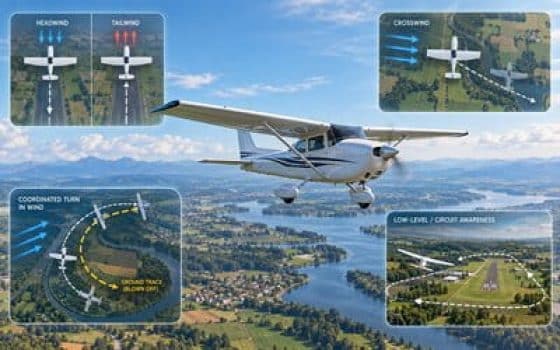
Cessna illustrating headwind, tailwind, crosswind and drift illusions during flight
Pre-Flight Lesson Basic Maneuvers

When flying close to the ground, wind can make the airplane's movement look very different from what the pilot expects. The ground may appear to move faster or slower beneath the airplane, and the airplane may also drift away from its expected path.

These changes in movement over the ground are real, but they can create visual illusions. If the pilot misinterprets what is happening, the result may be an unnecessary or incorrect control input.

Lesson Objective

Understand what the wind is really doing

Learn to distinguish airspeed, groundspeed and drift, recognize the illusions they can create near the ground, and respond correctly while maintaining safe and coordinated flight.

Start Here

How wind changes the airplane's movement over the ground

An airplane flies through the air around it. At the same time, that air mass may be moving across the ground because of the wind. This means that the airplane's movement through the air and its movement over the ground are not always the same.

To understand illusions created by wind, you must first separate three different ideas: airspeed, groundspeed and drift.

Airspeed Speed through the air

Airspeed tells you how fast the airplane is moving through the surrounding air. The airspeed indicator shows this information to the pilot.

Groundspeed Speed over the ground

Groundspeed tells you how fast the airplane is moving across the surface. A headwind reduces groundspeed, while a tailwind increases groundspeed.

Drift Sideways movement over the ground

Wind from the side can move the airplane away from the ground track it would follow in calm air. This sideways displacement over the ground is called drift.

Two Different Effects of Wind

The headwind or tailwind component changes groundspeed. The crosswind component can move the airplane sideways over the ground and create drift.

These are different effects, and they can create different visual illusions.

Remember Airspeed = speed through the air.
Groundspeed = speed over the ground.
Drift = sideways displacement over the ground caused by wind.
Visual Effect

Why can wind create visual illusions near the ground?

The closer the airplane is to the ground, the easier it is to see its movement in relation to roads, fields, buildings and other reference points.

Because wind changes both groundspeed and ground track, these visual references may move differently from what the pilot expects. This can create a false impression of the airplane's speed or direction of movement.

Groundspeed The ground may appear to move faster or slower

With a tailwind, the airplane covers the ground more quickly. With a headwind, it covers the ground more slowly. Close to the surface, this difference is very noticeable.

Drift The airplane may appear to move sideways

A crosswind changes the airplane's path over the ground. When this sideways movement becomes visible against nearby ground references, it can give the pilot a misleading impression of the airplane's flight path.

Why Altitude Matters

At higher altitude, the ground is farther away and its apparent movement is less noticeable. Close to the ground, the same change in groundspeed or ground track appears much more pronounced.

Remember The wind changes the airplane's real movement over the ground. Flying close to the ground makes those changes look much more dramatic to the pilot.
Wind Awareness

How to determine wind direction

Before flying close to the ground or making turns in wind, identify the wind direction. This will help you understand why the airplane is moving differently over the ground.

Weather Information Know the wind before takeoff

Check the wind at your departure airport and review the forecast winds for the area where you will be flying.

Ground References Observe the airplane's drift

Compare your direction of flight with a road or another clear ground reference. If the airplane is being carried sideways, the direction of that drift gives you information about the wind.

Visual Clues Look at the environment

Smoke, dust, tall grass and crops can also show the direction of the wind and give an indication of its strength.

In Flight

Do not rely on a single clue. Compare the wind information you already have with the movement of the airplane over the ground and the visual signs around you.

Remember Know where the wind is coming from before interpreting changes in groundspeed or drift.
Groundspeed Illusion

Upwind and downwind: the groundspeed illusion

When the airplane flies into the wind, its groundspeed is lower. When it flies with the wind, its groundspeed is higher. The airspeed can remain the same in both situations.

Close to the ground, the pilot can clearly see this difference. Ground objects appear to pass more slowly when flying upwind and more quickly when flying downwind. This can create a false impression that the airplane itself has slowed down or sped up.

Flying Upwind The ground appears to move more slowly

A headwind reduces groundspeed. Because the airplane moves more slowly over the ground, the pilot may feel that the airplane is flying too slowly even when the indicated airspeed is correct.

Flying Downwind The ground appears to move more quickly

A tailwind increases groundspeed. Objects on the ground pass more quickly, which can make the airplane appear to be flying faster even when the indicated airspeed has not changed.

Diagram showing the effect of headwind and tailwind on aircraft groundspeed during low-level flight
The same airspeed can produce a different groundspeed depending on whether the airplane is flying upwind or downwind.
Common Trap

Do not judge airspeed from the speed of the ground

When flying downwind, the faster movement of the ground may tempt the pilot to slow the airplane. At low altitude, reducing the actual airspeed unnecessarily can become dangerous.

Use the airspeed indicator and the normal attitude references for the manoeuvre instead of trying to make the ground appear to move at a familiar speed.

Example

Imagine the airplane maintains the same indicated airspeed while first flying into a strong wind and then flying downwind. The airplane has not suddenly become faster through the air, but its speed over the ground has increased. From a low altitude, that difference can look dramatic.

Remember Upwind: lower groundspeed — the ground appears slower.
Downwind: higher groundspeed — the ground appears faster.
Use the airspeed indicator to judge airspeed, not the apparent speed of the ground.
Drift Illusion

Turning in wind: the drift illusion

An airplane turns through the air around it. When that air mass is moving because of wind, the entire turn is also carried across the ground.

The result is a ground track that looks different from the turn the pilot would see in calm air. Close to the ground, this difference can be strong enough to create the impression that the airplane is slipping or skidding even when the turn is coordinated.

Turn 1

Upwind → Downwind

Turn from upwind to downwind Top view showing a still-air reference turn and a ground track displaced by wind, creating an apparent inward movement. WIND UPWIND DOWNWIND Appears to move inward Top view — schematic only

As the airplane turns from upwind toward downwind, the wind changes the shape of its track over the ground. From a low altitude, the airplane may appear to move toward the inside of the turn.

Ground track with wind Still-air reference
Turn 2

Downwind → Upwind

Turn from downwind to upwind Top view showing a still-air reference turn and a ground track displaced by wind, creating an apparent outward movement. WIND DOWNWIND UPWIND Appears to move outward Top view — schematic only

When the airplane turns from downwind toward upwind, the wind again changes the ground track. The airplane may now appear to move toward the outside of the turn.

Ground track with wind Still-air reference
What is real?

The wind really does change the airplane's track over the ground.

What is the illusion?

The pilot may interpret that ground movement as a slip or skid even though the airplane is coordinated.

Important

Do not correct an apparent slip or skid with rudder

Ground movement alone does not tell you whether the airplane is coordinated. Check the horizon and the slip/skid indicator before making a correction.

Remember The drift over the ground is real. The apparent slip or skid may be an illusion.
Pilot Response

How to avoid reacting to the illusion

Wind can change what you see over the ground without changing the airplane's airspeed or coordination. Before changing the controls, check what is really happening.

Ground appears faster or slower
CHECK Indicated airspeed

A headwind or tailwind changes groundspeed, but it does not directly change the indicated airspeed.

PILOT ACTION

Maintain the correct airspeed for the manoeuvre. Do not speed up or slow down because of the apparent movement of the ground.

Turn appears to slip or skid
CHECK Horizon and slip/skid indicator

The wind can change the shape of the ground track even when the airplane is correctly coordinated.

PILOT ACTION

Keep the turn coordinated. Do not apply rudder only because the ground track looks unusual.

Airplane is drifting off the desired track
CHECK Position over the ground

Drift is real. The wind can move the airplane away from the intended ground track.

PILOT ACTION

Correct for the wind so that the airplane follows the required ground track.

Use the Right Reference
Airspeed Airspeed indicator

Tells you how fast the airplane is moving through the air.

Coordination Slip/skid indicator

Helps you confirm whether the turn is coordinated.

Ground Track Outside references

Show where the airplane is actually moving over the ground.

Remember Use airspeed for airspeed, the slip/skid indicator for coordination, and ground references for ground track.
Practical Application

Low-level and circuit situations

Drift illusions become more important as the airplane gets closer to the ground. The pilot has stronger visual references, less height available, and less time to recognize a misleading impression.

Low Altitude Visual movement becomes more noticeable

Nearby roads, fields and buildings make even small changes in the airplane's movement over the ground easier to see.

Circuit The wind effect changes around the pattern

Each turn changes the airplane's direction relative to the wind. The amount of drift and the shape of the ground track therefore change from one part of the circuit to another.

Limited Space Drift can reduce your margin

Near terrain or obstacles, even a small displacement of the ground track can become important. Allow enough room before beginning the manoeuvre.

Circuit Awareness

Think ahead as the airplane changes direction

Do not expect every turn in the circuit to produce the same ground track. Before each turn, consider where the wind is coming from and how it may move the airplane over the ground.

This helps you maintain a suitable circuit shape and prevents you from being surprised by the airplane's position after the turn.

Example

A strong wind across the circuit

Imagine a strong wind blowing across the runway. On one side of the circuit, the wind may carry the airplane toward the runway. On another leg, it may carry the airplane away from it.

The airplane can be correctly flown and still end up in a different position over the ground than expected.

Low-Level Safety

Leave enough space for the real effect of the wind

The visual illusion may be misleading, but the displacement of the airplane over the ground is real. Do not plan a turn so close to terrain or obstacles that unexpected drift removes your safety margin.

Remember Near the ground, anticipate where the wind will carry the airplane and leave enough room for the resulting ground track.
Review

Review Questions

Check your understanding of groundspeed, drift and the visual illusions created by wind.

1. What is the difference between airspeed and groundspeed?

Airspeed is the airplane's speed through the surrounding air. Groundspeed is its speed over the ground.

2. Why are wind effects easier to see at low altitude?

Ground references are closer to the airplane, so changes in movement over the ground are much easier to notice.

3. What visual illusion can occur when flying downwind?

The higher groundspeed makes ground objects pass more quickly. This can make the airplane appear to be flying too fast.

4. What is drift?

Drift is the sideways displacement of the airplane's ground track caused by wind.

5. Why can a coordinated turn appear to be slipping or skidding?

Wind changes the airplane's track over the ground. At low altitude, this changing ground track can create the impression of a slip or skid even when the airplane is coordinated.

6. How can you check whether the airplane is actually coordinated?

Check the airplane's attitude and the slip/skid indicator instead of judging coordination from the movement of the ground.

7. Why is drift important near terrain or obstacles?

Wind can move the airplane's ground track closer to terrain or obstacles. The pilot must allow enough space for this displacement.

error:
Study flight
Logo