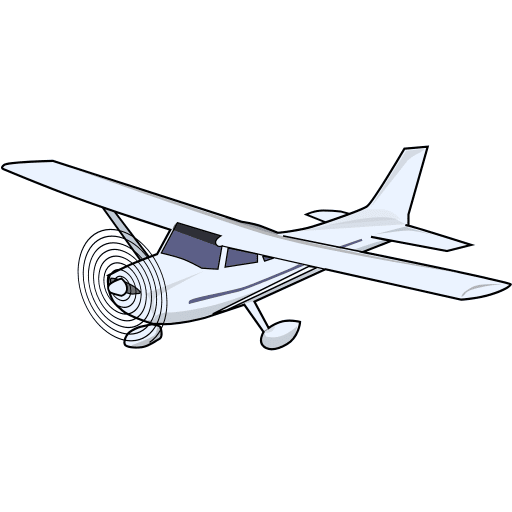
This ancillary controls preflight lesson introduces two engine controls commonly encountered in light training aircraft: carburetor heat and the mixture control. You will learn what each control does, how carburetor icing can affect engine performance, and how to recognize the warning signs before using these controls in flight.

Carburetor Heat
Supplies heated induction air to help prevent or remove ice forming inside the carburetor.

Mixture Control
Adjusts the proportion of fuel supplied to the engine as operating conditions change.
Carburetor Heat and Carburetor Icing
Carburetor ice forms when moisture freezes inside the carburetor as the incoming air is cooled. The temperature drop is caused by both fuel vaporization and the pressure drop as air accelerates through the carburetor venturi. Even a relatively small accumulation of ice can reduce airflow, decrease engine power and eventually cause rough running.
When Can Carb Ice Form?
- Moisture must be present in the incoming air.
- The temperature inside the carburetor can fall far below the outside air temperature.
- Carburetor icing can occur even in clear weather and at surprisingly warm outside temperatures.
Indications of Carburetor Ice
- With a fixed-pitch propeller, the first indication is usually a decrease in engine RPM.
- With a constant-speed propeller, manifold pressure usually decreases while RPM may initially remain constant.
- Engine roughness, vibration or further power loss may follow as ice accumulates.
What Should You Do?
- Apply full carburetor heat immediately when carburetor ice is detected.
- Leave the heat fully on until you are certain that the ice has been removed.
- Expect an initial additional power or RPM drop and possible roughness while the ice melts.
Carb Ice Is Not Just a Cold-Weather Problem
Carburetor icing can occur at outside air temperatures as high as approximately 100°F (38°C) when sufficient moisture is present. Do not use outside temperature alone to decide whether carburetor icing is possible.
Carburetor Heat System
When carburetor heat is selected, warm induction air is directed toward the carburetor. This raises the temperature of the incoming air and helps prevent or melt carburetor ice.
Because heated air is less dense, applying carburetor heat normally causes a noticeable reduction in engine power and also makes the fuel-air mixture richer.

Follow the Procedure for Your Aircraft
Carburetor heat procedures vary between aircraft and engine installations. Use the procedure specified in the aircraft's POH or AFM for engine run-up, taxi, takeoff, descent and landing rather than relying on one rule for every airplane.
Mixture Control
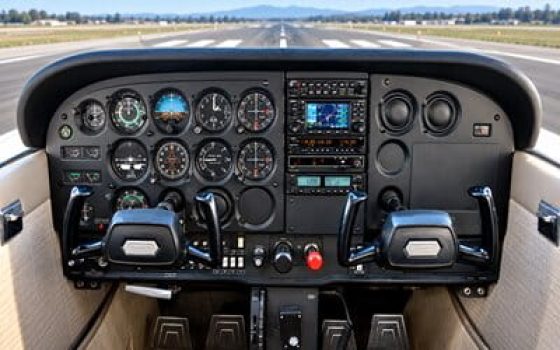
The mixture control changes the amount of fuel supplied to the engine. In many light training aircraft, including many Cessna 172s, it is the red control on the instrument panel.
Throttle
The throttle controls engine power. In an aircraft with a fixed-pitch propeller, moving the throttle changes engine RPM.
Mixture
The mixture control changes the amount of fuel mixed with the incoming air. It is not the control used to select engine RPM.
Air and Fuel Must Stay in Balance
The engine needs the right amount of fuel for the amount of air entering it.
The pilot uses the red mixture control to increase or reduce fuel flow.

Make the Mixture Richer
PUSH the red control toward the instrument panel.
This increases the amount of fuel supplied to the engine. Fully pushed in on a typical push-pull system is FULL RICH.
Make the Mixture Leaner
PULL the red control gradually away from the instrument panel.
This reduces the amount of fuel supplied to the engine. This is called leaning the mixture.
As You Climb
Air becomes less dense as altitude increases. If the fuel flow remains unchanged, there can eventually be too much fuel for the amount of air entering the engine.
When the POH calls for leaning, pull the red mixture control out gradually to reduce fuel flow.
As You Descend
If the mixture was leaned at altitude, the air becomes denser again as you descend.
Push the red mixture control in gradually to increase fuel flow again, following the procedure in the aircraft POH.
What Happens If the Mixture Is Wrong?
“Too rich” means that there is too much fuel for the amount of air entering the engine. “Too lean” means that there is too little fuel for the available air.
Mixture Too Rich
Too much fuel for the amount of air entering the engine.
- The engine may run rough.
- Engine power may decrease.
- Fuel consumption increases.
- Spark plugs may become fouled.
- Aircraft range is reduced.
Mixture Too Lean
Too little fuel for the amount of air entering the engine.
- The engine may run rough.
- Engine power may decrease.
- Engine temperatures may become excessive.
- An excessively lean mixture can contribute to detonation under inappropriate operating conditions.
Do Not Pull the Mixture Fully Out in Flight
On a typical push-pull mixture control, fully out is IDLE CUTOFF. This cuts off the fuel supply and is normally used to shut down the engine. Leaning means pulling the control out only as far as required by the aircraft procedure.
Follow the Procedure for Your Aircraft
The exact mixture setting depends on the aircraft, engine, altitude and phase of flight. Your instructor will show you how to adjust the red mixture control and which engine indications to monitor. Always follow the procedure in the aircraft POH or AFM.