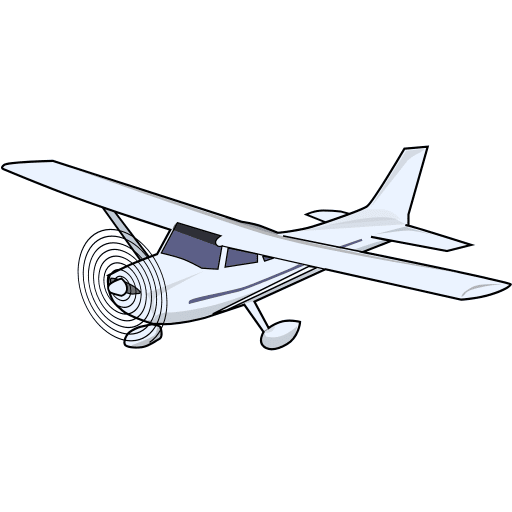

This pre-flight lesson covers the principles and procedures used for a short field takeoff. It examines two main situations: a short field takeoff without an obstacle and a short field takeoff with an obstacle.
The lesson explains how runway length, takeoff performance, aircraft configuration and airspeed affect each technique, and how the initial climb changes when obstacle clearance is required.
It builds on the takeoff sequence covered in the Normal Takeoff Pre-Flight Lesson . Exact configuration, speeds and procedures must always come from the approved AFM/POH.
The focus is on making efficient use of the available runway and transitioning into the recommended climb.
The initial climb follows the aircraft-specific obstacle-clearance procedure before transitioning to the normal climb.
A runway that provides a comfortable margin under one set of conditions may provide much less margin under another. Before flight, the pilot must be able to evaluate the available runway, aircraft performance and departure path, and determine which takeoff procedure is appropriate.
What Makes a Takeoff “Short Field”?
A short field takeoff is not defined by one specific runway length. What matters is whether the available takeoff distance provides enough room for the airplane to complete the takeoff with an acceptable performance margin.
A runway that is long for one airplane may be short for another. The required distance also changes with aircraft weight and operating conditions.
The decision comes from comparing the runway available with the takeoff performance calculated for that airplane and that flight.
Determine the usable runway distance and consider whether the departure path includes an obstacle.
Use the AFM/POH performance information for the actual airplane, weight and operating conditions.
Changes in aircraft weight, wind, temperature, airport elevation or runway condition can change the distance required for takeoff. These performance factors are examined in detail later in this lesson.
Normal Takeoff vs Short Field Takeoff
The basic takeoff sequence is still the same: takeoff roll, liftoff and initial climb. A short field takeoff changes how the airplane is positioned, configured and flown to obtain the required performance.
Maintain runway alignment, monitor engine indications, use smooth pitch control, stay coordinated and keep most of your attention outside the airplane.
Factors That Affect a Short Field Takeoff
The conditions that increase takeoff distance become especially important when runway length or obstacle clearance leaves little performance margin.
Aircraft weight, density altitude, wind and runway conditions can significantly change the distance required. Use the airplane's performance data for the actual conditions before the flight.
Short-field planning is based on the takeoff distance that is truly available. Unnecessary runway used before acceleration begins reduces the distance remaining for the takeoff.
Flap setting, power application and other configuration details are aircraft-specific. Use the procedure published for the airplane.
Lifting off too early may leave the airplane with insufficient airspeed. Remaining on the runway longer than required uses additional distance. Follow the published short-field speed and technique.
A takeoff without an obstacle does not necessarily require the same initial climb technique as a takeoff with an obstacle. Use the speed and transition specified for the airplane.
The airplane must also gain enough altitude to clear the obstacle. For this reason, the distance required to clear an obstacle can be much greater than the ground roll alone.
Check the AFM/POH for the recommended flap setting, power application, liftoff speed, obstacle-clearance speed, flap retraction procedure and transition to the normal climb.
Vx, Vy and Short-Field Takeoff Speeds
Two climb speeds are especially important during a short field takeoff: Vx and Vy. They serve different purposes during the initial climb.
Vx gives the greatest altitude gain for the horizontal distance traveled. It is used when the airplane needs to gain as much height as possible over a short horizontal distance.
Vy gives the greatest altitude gain in a given amount of time. After the short-field climb requirement is complete, the airplane transitions toward Vy.
After liftoff, establish Vx or the short-field climb speed specified by the manufacturer.
When no obstacle is present, maintain the required short-field climb speed to at least 50 ft above the takeoff surface, unless the AFM/POH specifies otherwise. Then transition smoothly toward Vy.
After liftoff, establish the published obstacle-clearance speed, commonly Vx.
Maintain that speed until the obstacle is safely cleared. Then lower the pitch attitude smoothly and accelerate toward Vy.
The airplane may have a specific published rotation or liftoff speed for a short field takeoff.
After becoming airborne, adjust pitch as required to establish the published short-field climb speed.
The AFM/POH determines the short-field liftoff speed, obstacle-clearance speed and the correct transition from the initial climb to Vy.
Before Takeoff: Use All Available Runway
In a short field takeoff, the airplane should be positioned so the takeoff roll begins as close as practical to the beginning of the usable takeoff area.
Taxi into position, align the airplane with the intended takeoff path, and make maximum practical use of the available takeoff area.
Position the airplane to preserve as much usable acceleration distance as practical.
Use the short-field flap setting specified in the AFM/POH, if one is recommended.
Proper trim helps the airplane respond normally during rotation and the initial climb.
Position the flight controls for the existing wind before beginning the takeoff roll.
Confirm the published short-field liftoff and climb speeds before entering the takeoff roll.
Some aircraft procedures call for setting takeoff power while the brakes hold the airplane in position. Others use a smooth, continuous application of power as the takeoff roll begins.
Follow the method specified for the airplane. Holding the brakes until maximum RPM is reached has not been shown to produce a shorter takeoff roll in every light single-engine airplane.
If maximum available distance is needed, use the runway from the appropriate full-length starting point rather than giving up usable distance before the takeoff begins.
Short Field Takeoff Roll — Step by Step
Once the airplane is correctly positioned, the short-field takeoff roll requires the correct configuration, precise power, directional control and airspeed management. Follow the AFM/POH procedure for the airplane.
Confirm the configuration and set takeoff power
Before beginning the takeoff roll, confirm that the airplane is configured for the published short-field procedure.
Short-Field ConfigurationApply takeoff power using the method specified in the AFM/POH. Depending on the airplane, power may be established while the brakes hold the airplane or applied as the takeoff roll begins.
Engine CheckRelease the brakes when required by the aircraft-specific procedure and allow the airplane to accelerate.
Avoid unnecessary braking or control inputs that increase drag and reduce acceleration.
Use rudder to keep the airplane aligned with the runway centerline while maintaining the required wind correction.
As speed increases, the controls become more effective. Make progressively smaller corrections.
Make quick checks while keeping most of your attention outside and along the runway.
Confirm that power remains normal, the required engine indications are acceptable and the airspeed is increasing normally.
Reach the published short-field takeoff speed
Continue accelerating while maintaining precise directional control. Use the short-field rotation or liftoff speed specified for the airplane.
When the published speed is reached, begin the aircraft-specific rotation and liftoff technique described in the next section.
The airplane must reach the correct speed and configuration to leave the runway and continue the takeoff safely.
If engine indications are abnormal, expected power is not available, the airspeed is not increasing normally, acceleration is clearly inadequate, or directional control is poor while sufficient runway remains, reject the takeoff according to the aircraft procedure.
Short Field Rotation and Liftoff — Step by Step
Rotation begins at the published short-field speed. The goal is to establish the correct takeoff attitude, achieve a positive liftoff and reach the required initial climb speed without forcing the airplane into the air.
Begin rotation at the published speed
At the short-field rotation or liftoff speed specified in the AFM/POH, smoothly apply back-elevator pressure and begin raising the nose.
Do not rotate early simply to reduce the ground roll. Premature rotation increases drag and can reduce acceleration and climb performance.
Establish the short-field takeoff attitude
Raise the nose smoothly toward the pitch attitude required for the published initial climb speed.
Use the outside view and horizon as the primary pitch reference. Avoid an abrupt or excessive nose-up movement.
Hold the required attitude and allow the airplane to leave the runway as sufficient lift develops. Do not pull the airplane into the air.
Immediately after liftoff, the airplane is operating in ground effect, where induced drag is reduced.
Maintain precise pitch control and allow the airplane to reach the initial climb speed specified for the short-field procedure.
If the airplane becomes airborne before reaching that speed, do not force a steep climb out of ground effect. Allow the airplane to accelerate as required by the aircraft procedure.
Close to the surface, ground effect reduces induced drag. The airplane may therefore lift off and feel capable of flying at a speed that would not provide adequate climb performance outside ground effect.
As the airplane climbs away from the surface, the benefit of ground effect decreases and induced drag increases. This is why attempting to climb away too early can cause poor acceleration, a weak climb or even settling back toward the runway.
An airplane may be able to lift off in ground effect but still lack the performance required to climb away from the surface. Use the published short-field speeds and performance data for the airplane.
Short Field Takeoff With an Obstacle — Step by Step
When an obstacle is in the departure path, the initial climb must produce the greatest practical altitude gain over the shortest horizontal distance. After liftoff, precise airspeed and pitch control are essential.
Establish the obstacle-clearance speed
After liftoff, adjust the pitch attitude to establish the obstacle-clearance speed published for the airplane, commonly Vx.
If the airplane lifts off below Vx, remain briefly in ground effect and allow it to accelerate to Vx before beginning the obstacle-clearance climb.
Use smooth pitch corrections. Do not chase the airspeed indicator with large nose-up or nose-down movements.
Maintain speed, direction and coordination
Hold the recommended obstacle-clearance speed while maintaining the departure path. Correct for wind drift and keep the airplane coordinated.
Clear the obstacle
Maintain the published obstacle-clearance speed until the obstacle has been safely cleared.
Do not lower the nose simply because the airplane is approaching the obstacle. Continue the required climb profile until obstacle clearance is assured.
Once the obstacle is safely cleared, lower the pitch attitude smoothly and allow the airplane to accelerate toward Vy or the climb speed specified by the AFM/POH.
Avoid an abrupt pitch change. Maintain positive climb and directional control throughout the transition.
Once the required speed and positive climb are established, complete the configuration changes specified for the airplane.
Raising the nose above the attitude required to maintain the published obstacle-clearance speed does not improve obstacle clearance. It reduces airspeed and can move the airplane closer to a stall.

Common Short Field Takeoff Errors
A short field takeoff leaves less margin for poor preparation, incorrect configuration or imprecise airspeed control. Watch especially for the following errors.
Skipping the performance calculation
Using a short-field technique does not compensate for insufficient runway or poor aircraft performance.
Giving away usable takeoff distance
Starting farther down the runway reduces the distance available for acceleration and obstacle clearance.
Trying to become airborne too early
Premature rotation increases drag, reduces acceleration and can leave the airplane below the required climb speed.
Trying to climb too steeply
Raising the nose above the attitude required for the published climb speed reduces airspeed and does not improve obstacle clearance.
Fixating on the airspeed indicator
Constantly looking inside can reduce awareness of the runway track, aircraft attitude and obstacle position.
Retracting flaps or gear too early
An early configuration change can reduce lift or interrupt the climb while the airplane is still close to the ground or an obstacle.
Short Field Takeoff Review Questions
Check that you understand short-field performance, configuration, takeoff speeds, obstacle clearance and the main errors to avoid. Try to answer each question before opening the answer.
These ten questions review the key points from the Short Field Takeoff Pre-Flight Lesson.
Is a short field defined by a specific runway length?
Show Answer
A short field is a performance situation. What matters is the relationship between the runway available and the takeoff performance required under the actual conditions.
What factors can significantly change the takeoff distance required?
Show Answer
Runway surface, slope and aircraft configuration can also affect performance. Use the published performance data for the actual conditions.
Where should you find the correct flap setting, takeoff speed and short-field procedure?
Show Answer
A flap setting such as 10° may be specified for some airplanes, but it is not a universal short-field setting.
What is the difference between Vx and Vy?
Show Answer
Vx provides the greatest altitude gain over horizontal distance. Vy provides the greatest altitude gain over time.
Why should a short-field takeoff use the maximum practical usable runway?
Show Answer
Giving away runway before the takeoff begins reduces the distance available for acceleration.
What should you monitor while the airplane accelerates?
Show Answer
Keep most of your attention outside while confirming that the airplane is accelerating normally and remaining aligned with the runway.
What should you do if the airplane becomes airborne below the required obstacle-clearance speed?
Show Answer
Do not force a steep climb below the required speed. Establish the published climb speed before beginning the obstacle-clearance climb.
In the generic short-field procedure, when no obstacle is present, when do you transition from Vx toward Vy?
Show Answer
Then lower the pitch attitude smoothly and accelerate toward Vy.
With an obstacle in the departure path, how long should the obstacle-clearance speed be maintained?
Show Answer
After clearance, lower the pitch attitude smoothly and accelerate toward Vy or the climb speed specified in the AFM/POH.
Why is pulling the nose higher not a good way to improve obstacle clearance?
Show Answer
Obstacle clearance depends on maintaining the correct published climb speed. Excessive nose-up pitch can reduce climb performance and move the airplane closer to a stall.
Before flight, know the aircraft-specific configuration, speeds and takeoff performance. During the takeoff, maintain precise directional and airspeed control and follow the AFM/POH procedure.
Continue Your Training with Pilot Institute
Want to go further? Continue with the related Pilot Institute training lesson for additional ground-school instruction.
View the Training Lesson → Paid training course. Affiliate link — StudyFlight may earn a commission at no additional cost to you.